



How to Lose Weight After 40: Science-Backed Strategies for Men and Women
Weight loss after 40 often requires targeted nutritional support. weight loss supplements.
Meta Description: Struggling to lose weight after 40? Discover proven strategies to boost metabolism, balance hormones, and shed pounds with our science-backed guide for men and women. (158 chars)
Notice that the weight loss strategies that worked in your 30s suddenly stopped working? You’re not imagining it—and you’re definitely not alone.
After 40, your body undergoes significant hormonal, metabolic, and lifestyle changes that make weight loss more challenging—but far from impossible. Research shows that adults over 40 need approximately 200-300 fewer calories per day than they did at 30, while simultaneously facing increased stress, decreased sleep quality, and declining muscle mass.
In this comprehensive guide, you’ll discover:
- Why metabolism slows after 40 (and what actually works to reverse it)
- Hormone-specific strategies for men and women
- The 3-pillar approach: nutrition, training, and recovery
- Supplements with clinical evidence for the 40+ demographic
- Realistic timelines and sustainable expectations
Let’s decode what your body needs at this stage—and how to work with it, not against it.
Why Weight Loss Gets Harder After 40
Metabolic Rate Decline
Your resting metabolic rate (RMR) decreases by approximately 1-2% per decade after age 30. By 40, this compounds to a noticeable slowdown:
| Age Group | Average RMR Decline | Daily Calorie Impact |
|---|---|---|
| 30-39 | Baseline | 0 calories |
| 40-49 | -2-3% | -50-75 calories/day |
| 50-59 | -4-5% | -100-125 calories/day |
| 60+ | -6-8% | -150-200 calories/day |
What this means: Without lifestyle adjustments, you could gain 5-10 pounds per year from metabolic slowdown alone.
Muscle Mass Loss (Sarcopenia)
After 40, you lose 3-8% of muscle mass per decade if you don’t actively maintain it. Muscle tissue burns 6-10 calories per pound daily at rest—fat tissue burns only 2-3 calories.
The math: Losing 5 pounds of muscle = burning 30-50 fewer calories per day = 10,000+ fewer calories burned per year.
Hormonal Shifts
For Women (Perimenopause/Menopause):
- Estrogen decline → increased abdominal fat storage
- Progesterone changes → increased appetite and cravings
- Testosterone decline (yes, women need it too) → reduced muscle mass
For Men (Andropause):
- Testosterone drops 1-2% per year after 30
- Lower testosterone = reduced muscle mass, increased fat storage
- Cortisol often increases → belly fat accumulation
Lifestyle Factors
- Sleep quality declines: Less deep sleep = disrupted hunger hormones
- Stress increases: Career, family, aging parents = elevated cortisol
- Activity decreases: Sedentary jobs, less spontaneous movement
- Recovery slows: Need more time between intense workouts
The 3-Pillar Framework for Weight Loss After 40
Pillar 1: Nutrition Optimization
Protein Priority
Why it matters: Protein has the highest thermic effect (20-30% of calories burned during digestion), preserves muscle mass, and increases satiety.
Target: 1.6-2.2 grams per kilogram of body weight daily
| Body Weight | Daily Protein Target | Per Meal (4 meals) |
|---|---|---|
| 120 lbs (54 kg) | 86-119g | 22-30g |
| 150 lbs (68 kg) | 109-150g | 27-38g |
| 180 lbs (82 kg) | 131-180g | 33-45g |
| 200 lbs (91 kg) | 146-200g | 37-50g |
Best sources: Lean meats, fish, eggs, Greek yogurt, whey protein, legumes
Calorie Deficit Without Starvation
Aggressive deficit (>750 calories/day) backfires after 40 by:
- Slowing metabolism further
- Increasing muscle loss
- Elevating cortisol
- Triggering rebound binging
Optimal approach: 300-500 calorie deficit daily
Calculation:
- Find your TDEE (Total Daily Energy Expenditure)
- Subtract 300-500 calories
- Never go below 1,200 (women) or 1,500 (men) calories daily
Strategic Carbohydrate Timing
Carbs aren’t the enemy—but timing matters:
Eat carbs around activity:
- Pre-workout (30-60g): Fuels performance
- Post-workout (30-60g): Replenishes glycogen, aids recovery
Reduce carbs during sedentary periods:
- Evening meals (if not training)
- Rest days
Focus on fiber: 25-35g daily improves satiety and blood sugar control
Pillar 2: Training Smart
Strength Training is Non-Negotiable
Why: Preserves and builds muscle mass, which maintains metabolic rate.
Minimum effective dose: 2-3 sessions per week, 30-45 minutes
Key compound movements:
- Squats or leg press
- Deadlifts or hip hinges
- Push-ups or bench press
- Rows or pull-downs
- Overhead press
Progressive overload: Gradually increase weight, reps, or sets weekly
Cardio: Quality Over Quantity
HIIT (High-Intensity Interval Training):
- 2-3 sessions per week, 15-25 minutes
- Example: 30 seconds sprint, 90 seconds walk, repeat 8-10 times
- Burns more calories in less time, preserves muscle
LISS (Low-Intensity Steady State):
- 2-3 sessions per week, 30-45 minutes
- Walking, cycling, swimming at conversational pace
- Aids recovery, burns fat without stress
Avoid: Excessive steady-state cardio (60+ minutes daily) which can increase cortisol and muscle loss
Recovery Matters More Now
After 40, you need:
- 48 hours between training same muscle groups
- At least 1 full rest day per week
- Deload week every 6-8 weeks (reduce volume by 50%)
Pillar 3: Hormone & Lifestyle Optimization
Sleep: The Forgotten Weight Loss Tool
Impact: Poor sleep increases ghrelin (hunger hormone) by 15% and decreases leptin (satiety hormone) by 15%.
Target: 7-9 hours quality sleep nightly
Optimization strategies:
- Consistent sleep/wake time (even weekends)
- No screens 1 hour before bed
- Cool room (65-68°F / 18-20°C)
- No caffeine after 2 PM
- Consider magnesium glycinate (200-400mg before bed)
Stress Management
Chronic cortisol promotes:
- Abdominal fat storage
- Muscle breakdown
- Increased appetite and cravings
- Insulin resistance
Daily practices:
- 10 minutes meditation or deep breathing
- Nature walks (20+ minutes)
- Journaling or therapy
- Social connection
Alcohol Moderation
Reality check: Alcohol provides 7 calories per gram (almost as much as fat), reduces fat burning by up to 73% for several hours, and impairs judgment around food choices.
Guidelines:
- Maximum 1-2 drinks per week for optimal results
- Never drink on an empty stomach
- Choose lower-calorie options (vodka soda, dry wine, light beer)
Supplements That Actually Work After 40
Evidence-Based Options
| Supplement | Benefit | Dosage | Evidence Level |
|---|---|---|---|
| Protein Powder | Muscle preservation, satiety | 25-30g per serving | ⭐⭐⭐⭐⭐ Excellent |
| Creatine Monohydrate | Muscle strength, cognitive function | 5g daily | ⭐⭐⭐⭐⭐ Excellent |
| Caffeine | Metabolism boost, workout performance | 200-300mg pre-workout | ⭐⭐⭐⭐⭐ Excellent |
| Vitamin D3 | Hormone support, mood | 2,000-5,000 IU daily | ⭐⭐⭐⭐ Very Good |
| Omega-3 (EPA/DHA) | Inflammation reduction, fat metabolism | 2-3g daily | ⭐⭐⭐⭐ Very Good |
| Magnesium | Sleep quality, muscle recovery | 300-400mg before bed | ⭐⭐⭐⭐ Very Good |
| Green Tea Extract | Mild metabolism boost | 300-400mg EGCG daily | ⭐⭐⭐ Good |
Supplements to Approach Cautiously After 40
Stimulant-heavy fat burners: Can elevate blood pressure and heart rate
Thyroid boosters: May disrupt natural hormone balance
Detox teas: Often contain laxatives, can cause dehydration
Gender-Specific Strategies
For Women: Navigating Perimenopause & Menopause
Key challenges:
- Estrogen decline → increased abdominal fat
- Insulin sensitivity decreases
- Bone density concerns
Strategic adjustments:
- Increase protein: Aim for 2.0-2.2g/kg (higher end of range)
- Strength training emphasis: Protect bone density with weight-bearing exercise
- Consider HRT: Discuss hormone replacement therapy with your doctor
- Calcium + Vitamin D: 1,200mg calcium + 2,000-5,000 IU D3 daily
- Manage stress: Cortisol has amplified effects during hormonal transition
Helpful supplements:
- Black cohosh (for hot flashes)
- Maca root (hormone balance)
- Soy isoflavones (phytoestrogens)
For Men: Addressing Testosterone Decline
Key challenges:
- Testosterone drops 1-2% per year after 30
- Increased estrogen from aromatization in fat tissue
- Higher visceral fat accumulation
Strategic adjustments:
- Heavy compound lifts: Squats, deadlifts boost testosterone acutely
- Zinc optimization: 11mg daily (deficiency common in men over 40)
- Limit alcohol: Increases aromatization (testosterone → estrogen)
- Lose belly fat: Adipose tissue converts testosterone to estrogen
- Sleep optimization: Most testosterone produced during deep sleep
Helpful supplements:
- Zinc (11-15mg daily)
- Ashwagandha (300-600mg daily, may support testosterone)
- D-Aspartic Acid (2-3g daily, short-term use)
Important: If experiencing symptoms of low testosterone (fatigue, low libido, depression), consult a doctor for blood work before supplementing.
Common Mistakes to Avoid
❌ Doing What Worked at 30
The problem: Your body has changed. The same approach won’t work.
The fix: Adjust calories downward, prioritize protein and strength training, allow more recovery time.
❌ Excessive Cardio, Minimal Weights
The problem: Too much cardio increases cortisol and muscle loss, further slowing metabolism.
The fix: Prioritize strength training 2-3x/week, use cardio as a supplement (not the main event).
❌ Aggressive Calorie Restriction
The problem: Drastic deficits trigger metabolic adaptation, muscle loss, and rebound weight gain.
The fix: Modest deficit (300-500 calories), focus on nutrient density, be patient.
❌ Ignoring Sleep and Stress
The problem: You can’t out-diet poor sleep and chronic stress.
The fix: Treat sleep and stress management as foundational pillars, not optional extras.
❌ All-or-Nothing Thinking
The problem: Perfectionism leads to burnout and abandonment of efforts.
The fix: Aim for 80% consistency. One “bad” meal doesn’t ruin progress.
Realistic Expectations: What to Expect When
Month 1: Adaptation Phase
What happens:
- Initial water weight loss (2-5 pounds)
- Body adapting to new nutrition and training
- Possible soreness from strength training
- Hunger and cravings may increase temporarily
Focus: Building habits, not chasing scale numbers
Months 2-3: Fat Loss Phase
What happens:
- Steady fat loss (0.5-1.5 pounds per week)
- Strength improvements
- Better energy levels
- Clothes fitting differently
Focus: Progressive overload in training, consistent nutrition
Months 4-6: Transformation Phase
What happens:
- Cumulative fat loss (8-20 pounds typical)
- Visible muscle definition
- Improved blood markers
- Sustainable habits established
Focus: Maintenance planning, lifestyle integration
Beyond 6 Months: Lifestyle Phase
What happens:
- Weight loss may slow (normal)
- Focus shifts to body recomposition
- Maintenance calories may increase as activity rises
Focus: Long-term sustainability, not perfection
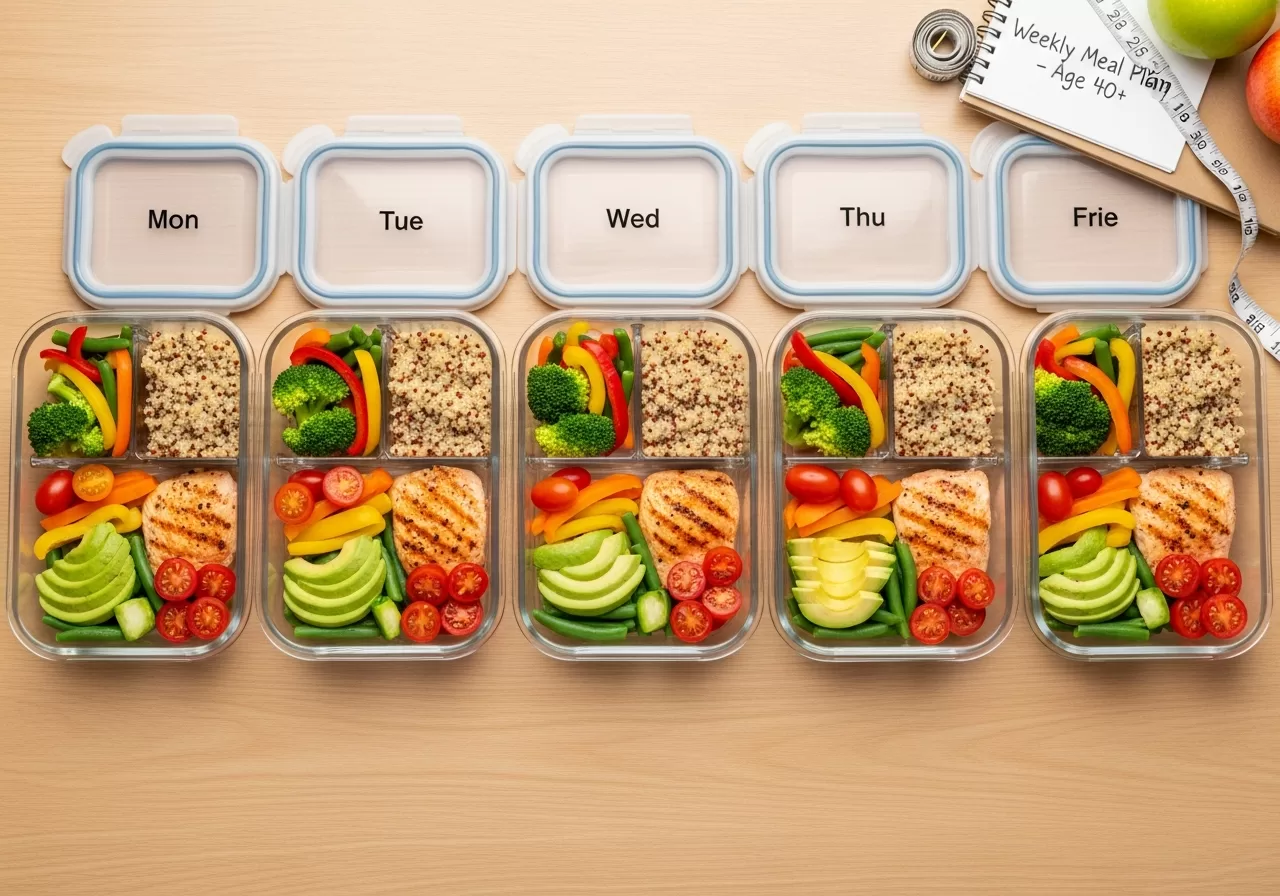
Sample Day of Eating (1,800 Calories)
Breakfast (450 calories)
- 3 eggs, scrambled
- 1 cup spinach, sautéed
- 1 slice whole grain toast
- 1/4 avocado
- Black coffee or tea
Mid-Morning Snack (200 calories)
- Greek yogurt (150g)
- 1/2 cup berries
- 10 almonds
Lunch (500 calories)
- 5 oz grilled chicken breast
- 2 cups mixed greens
- 1/2 cup quinoa
- 2 tbsp olive oil vinaigrette
- Vegetables of choice
Pre-Workout (150 calories)
- 1 small banana
- 1 scoop whey protein (in water)
Dinner (500 calories)
- 5 oz salmon
- 1 cup roasted broccoli
- 1/2 cup sweet potato
- 1 tbsp olive oil
Macros: ~160g protein, ~130g carbs, ~65g fat
Sample Weekly Training Schedule
| Day | Activity | Duration | Focus |
|---|---|---|---|
| Monday | Strength Training | 45 min | Lower body |
| Tuesday | HIIT Cardio | 20 min | Fat burning |
| Wednesday | Strength Training | 45 min | Upper body |
| Thursday | LISS Cardio | 30 min | Active recovery |
| Friday | Strength Training | 45 min | Full body |
| Saturday | Active Fun | 60 min | Hiking, sports, etc. |
| Sunday | Rest | – | Recovery |
Notes:
- Adjust based on your schedule and preferences
- Listen to your body—extra rest is okay
- Consistency beats perfection
Frequently Asked Questions
How long does it take to lose weight after 40?
With consistent effort, expect 0.5-1.5 pounds per week. This may seem slow compared to your 20s, but it’s sustainable and more likely to be fat (not muscle/water). Over 6 months, this equals 12-36 pounds—a meaningful transformation.
Should I do intermittent fasting after 40?
Intermittent fasting can work well for some people over 40, particularly for insulin sensitivity. However, women approaching or in menopause may find it increases cortisol and disrupts hormones. Try it for 2-3 weeks and assess energy, sleep, and hunger. If it backfires, abandon it.
Is it too late to build muscle after 40?
Absolutely not. Research shows that adults in their 40s, 50s, and even 70s can build significant muscle with proper strength training and protein intake. It may take slightly longer than in your 20s, but the capacity remains.
Why am I gaining weight even though I’m eating less?
Common causes after 40:
- Muscle loss: Scale weight stays same but body composition worsens
- Water retention: From increased sodium, hormones, or new training
- Metabolic adaptation: From previous crash dieting
- Medical issues: Thyroid dysfunction, medication side effects
If you’ve been consistent for 4+ weeks with no results, consult a doctor for blood work.
Can I lose belly fat specifically?
Spot reduction isn’t possible, but after 40, visceral (belly) fat often responds well to:
- Strength training (especially compound lifts)
- Stress reduction (cortisol drives abdominal fat)
- Sleep optimization
- Limiting alcohol
- Moderate carb intake around workouts
Should I get my hormones tested?
If you’re experiencing:
- Unexplained weight gain
- Persistent fatigue
- Low libido
- Depression or anxiety
- Hair loss
Then yes—ask your doctor for comprehensive hormone panels (thyroid, sex hormones, cortisol, insulin).
When to See a Doctor
Consult a healthcare provider before starting a weight loss program if you have:
- Heart disease or high blood pressure
- Type 2 diabetes
- Thyroid disorders
- Joint problems or chronic pain
- History of eating disorders
- Take medications that affect weight
Also see a doctor if:
- You’ve lost weight unintentionally
- You experience dizziness, chest pain, or severe fatigue during exercise
- Weight loss stalls completely despite 4+ weeks of consistency
After 40, weight loss usually depends on protein, strength training, sleep, medication context, and appetite control before supplements. Use the weight loss supplements guide only after those basics are clear.
If metabolism feels slower, metabolism boosters and fat-burning supplements should be judged as support tools, not replacements for the calorie, muscle, and recovery plan.
Conclusion: Your Next Steps
Losing weight after 40 requires a smarter, more nuanced approach—but it’s absolutely achievable. Here’s your action plan:
Week 1: Foundation
- Calculate your calorie and protein targets
- Plan 3 days of meals
- Start walking 20-30 minutes daily
- Set a consistent sleep schedule
Week 2: Add Training
- Begin 2 strength training sessions
- Add 1 HIIT session
- Track your food intake (use an app)
- Assess energy and adjust calories if needed
Week 3-4: Optimize
- Increase to 3 strength sessions
- Fine-tune macronutrients
- Address stress management
- Consider adding evidence-based supplements
Month 2+: Refine
- Assess progress (photos, measurements, not just scale)
- Adjust calories if weight loss stalls
- Continue progressive overload in training
- Build sustainable habits for life
Remember: The goal isn’t to look like you did at 25. The goal is to be the healthiest, strongest version of yourself at 40, 50, 60, and beyond.
Explore Weight Loss Supplements
Further Reading:
Disclaimer: This article is for informational purposes only and does not constitute medical advice. Consult with a healthcare professional before starting any new diet or exercise program, especially if you have pre-existing health conditions.
Last Updated: March 2026
Evidence and Safety Context
Supplement evidence varies by ingredient, dosage, health status, and study quality. Use this article as educational context, not as medical advice. For broader safety guidance, review authoritative supplement resources and talk with a qualified clinician before using supplements, especially if you take medication, have a medical condition, or are pregnant or breastfeeding.